Plate Chains: Types, Industrial Applications and Advantages in Conveying Systems
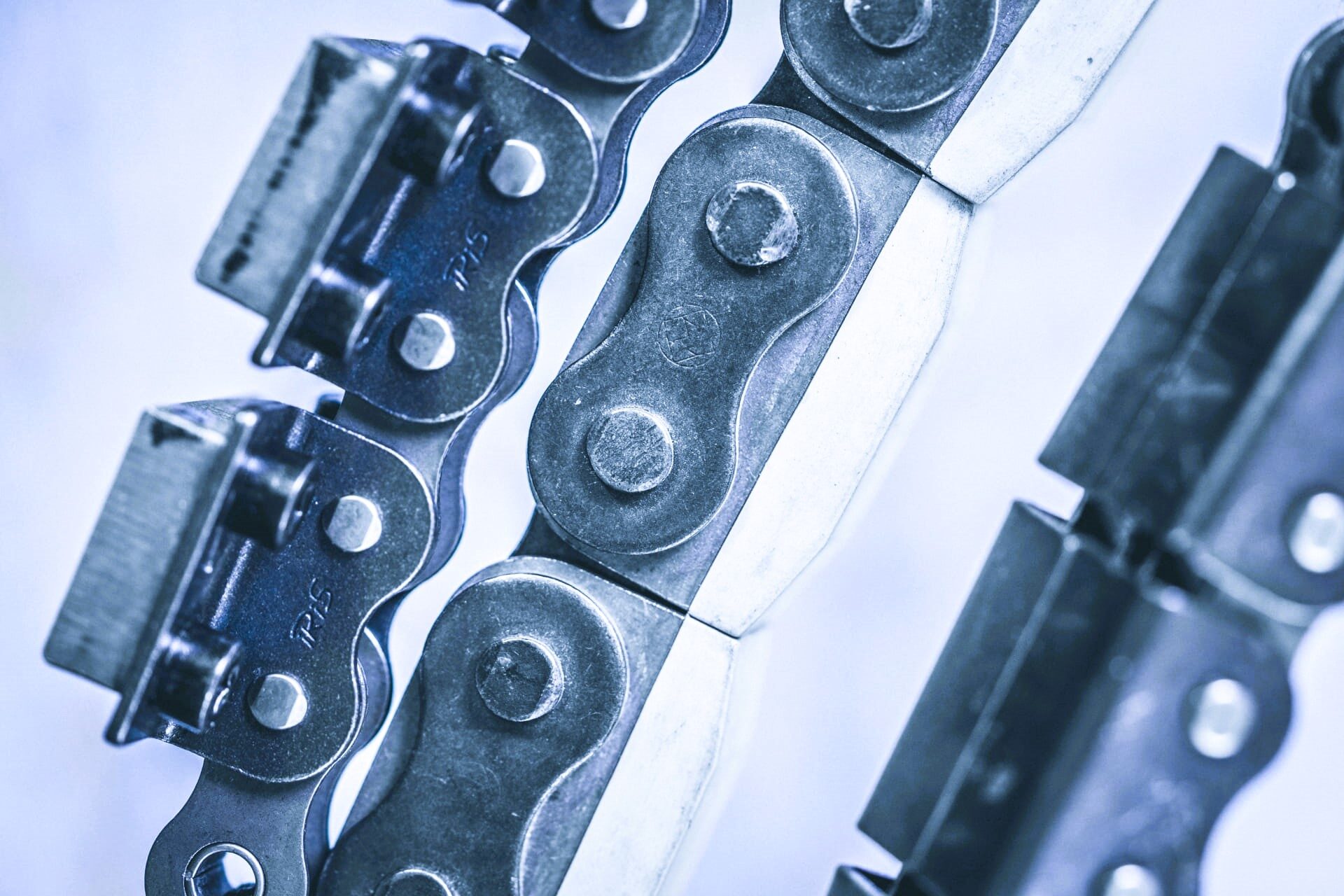
Plate chains are one of the most versatile solutions within the field of industrial conveying chains. Their design, based on the integration of attachments or “plates” onto a standard roller chain, enables adaptation to a wide range of applications where not only motion is transmitted, but products are also conveyed, positioned, or handled.
In increasingly demanding industrial environments, these solutions stand out due to their high degree of customisation and their ability to adapt to specific processes. This article examines their main applications, types, and advantages from a technical perspective.
-
What are plate chains and how do they work
Plate chains are roller chains equipped with lateral or top-mounted elements that enable the direct transport of parts or materials. These plates may be straight, curved, or custom-designed depending on the application.
Unlike conventional chains, whose primary function is power transmission, these chains are specifically designed for integration into conveying systems, where the chain itself acts as a product support.
There are two main configurations:
- Single-pitch chains: suitable for short distances and light products
- Double-pitch chains: more commonly used in industrial conveying due to higher efficiency and fewer components
-
Main industrial applications
Plate chains are used across multiple sectors where controlled and continuous product movement is required.
Most common applications:
- Conveying lines in the food industry
- Component handling in the automotive sector
- Conveying systems in industrial machinery
- Processes in the electronics and precision industries
These chains enable the system to be adapted to the geometry of the product, which is critical in processes where stability and positioning are essential.
They are also widely used in systems requiring synchronisation between movement and process, such as assembly or sorting operations.
-
Types of plate chains according to design
One of the key strengths of these chains lies in their adaptability. Numerous configurations exist depending on the application. The geometry of the plate defines the functionality of the chain.
Most common types:
- Straight plates: for general conveying
- Curved plates: to improve product guidance
- V-shaped plates: designed for cylindrical objects
- U-shaped plates with coating: for protecting delicate surfaces such as glass or wood
Example: These conveyor chains are available with curved or straight plates, on one or both sides.
-
Special solutions and customisation
In advanced industrial applications, standard chains are not always sufficient. For this reason, plate chains are often custom-designed.
Customisation options include:
- Specific spacing between plates
- Adapted materials (stainless steel, anti-corrosion coatings)
- Integration of additional components (extended pins, rubber profiles)
- Design for lubrication-free environments
For example, maintenance-free chains with self-lubricating bushings are available for use in environments where lubrication is not feasible or could contaminate the product. Customisation is key to adapting the chain to the process—not the other way around.
-
Advantages in conveying and handling systems
The use of plate chains offers several advantages over other conveying systems:
- Adaptability to complex geometries
- Stable and controlled transport
- Integration into automated processes
- High wear resistance
- Possibility of compact and low-noise design
Additionally, they can reduce the number of system components—particularly in double-pitch configurations—thereby improving reliability and reducing maintenance requirements.
-
Key factors for selecting the appropriate chain
Selecting the correct chain is essential to ensure system performance.
Factors to consider:
- Type of product to be conveyed
- Weight and dimensions
- Line speed
- Environmental conditions (humidity, corrosion, temperature)
- Cleaning or lubrication requirements
-
Best practices in the use of plate chains
- Verify system alignment
- Maintain proper lubrication (where applicable)
- Inspect the condition and fastening of the plates
- Avoid overloads or impacts
- Carry out regular inspections
Conclusion
Plate chains are a key solution in industrial applications where product conveying and handling require precision, adaptability, and reliability.
Thanks to their customisation capabilities and the wide range of available designs, they enable process optimisation across multiple sectors. In demanding environments, selecting the appropriate configuration not only enhances performance but also reduces operating costs and improves efficiency.
In specific applications, having a tailored solution can make the difference between a merely functional system and a truly optimised one.